Catégorie : Hacks

Console série sur liseuse Samsung E60

Les bons plans Samsung de janvier avait déjà fait le tour du web, et je n’en reparlerais pas (sauf pour dire que j’en ai profiter pour acquérir une liseuse Samsung E60).

Une communauté s’est formée autour d’un forum (e60 sur hardware.fr) et d’un espace google code (e60-open).

On y trouve pas mal d’infos et en particulier la console série. De mon coté je dispose d’un adaptateur USB vers série en LVTTL 3.3V (à base de FTDI FT2232C) donc j’ai opté pour la connexion sur R232 et R233. Or RDX (R232) est déjà connecté au circuit MAX232 qui converti les niveau LVTTL vers les niveaux série, et apparemment ce petit gars était plus fort que mon FTDI… J’ai donc retiré R232 et connecté mon FTDI à la palace. Restait à savoir quel pad de R232 allait vers le CPU… Coup de pot, le premier que j’ai essayé était le bon: le coté le plus proche de la batterie.

Une petite photo de mes belles soudures :
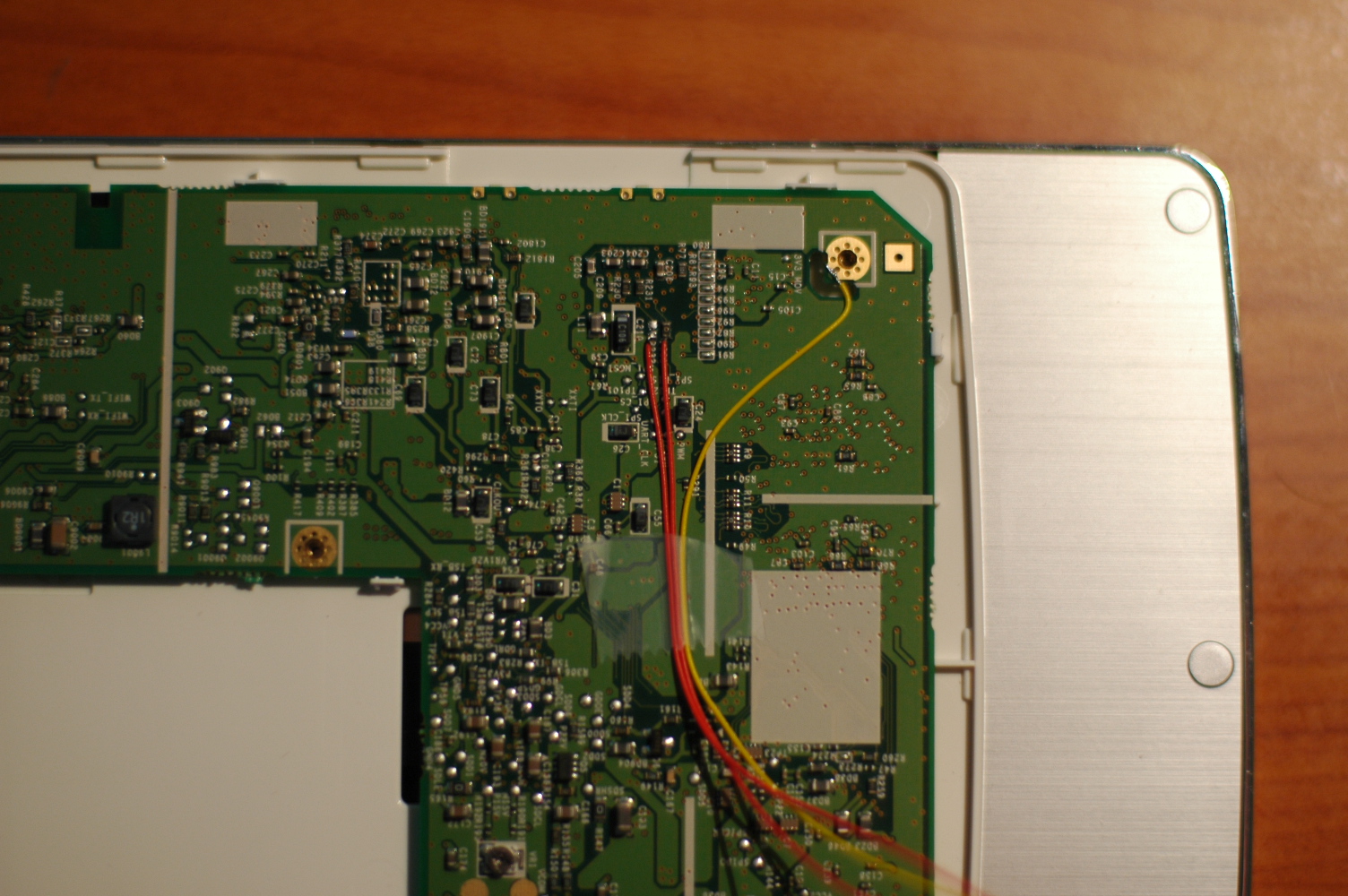
mes belles soudures

Et voila, j’ai ensuite suivi la procédure pour tester un kernel en chargeant le kernel fourni sur le SVN du projet. Et ça à marché (à ceci prêt que j’ai dû déchargé le module secbulk, donc soit j’ai pas compris, soit il ne sert pas).

Prochain épisode, compilation et test d’un noyau Linux.

Building xserver 1.6 for Xorg 7.5

Update: As explained in other posts, I’m no longer using this xserver version myself. So this stays here, but I’m not planning to update it in any manner.

The goal of the xserver downgrading is to run intel IEGD drivers on recent GNU/Linux distribution (debian squeese in my case). This seams to be the only maintained driver for the US15W GMA500 (poulsbo) chipset.

Continuer la lecture →

Hacking zenphoto for https admin

Trying to use zenphoto I found it does not have an option to have the admin tasks in https and the gallery in regular http.

WordPress is doing this and reading Rian’s article: SSL and Cookies in WordPress 2.6 I had a better idea on how it works.

Before coding, I also read How to Properly Provide Mixed HTTP and HTTPS Support from mikeperry’s blog.

And this is basically what I implemented.

For once the result of my work is not hosted on my blog but directly on zenphoto’s trac : The ticket with zenphoto patch to allow both http and https.

ANSI Color support for xrootconsole

Having the system log on a background transparent window on the desktop look nice and can be useful (USB key plug events, network connection events and so on).
One way is to use a terminal like aterm or Eterm for instance using the following command:


aterm -tr -bl -ib 0 -title log -name log +sb -geometry '140x16+0+791' -e bash -c "tail --follow=name /var/log/full.log | ccze" &

With the -title and -name option the window decoration can be removed at the window manager level. OK, this is nice.

But when using fluxbox desktop wheeling will not work over the log as it is a window not the desktop.

So I switched to xrootconsole, but it has no color support… not a big deal, I just hacked it in 😉

Here is a sample usage of the hacked xrootconsole, the important part is the -A parameter for ANSI to ccze as the default is to use curses:


tail -n 16 --follow=name /var/log/full.log | ccze -A | xrootconsole --wrap --bottomup -geometry 233x16+1+818 &

Continuer la lecture →

netsed

An old hack (2 years old  according to my subversion db !!)

This started with my 5.1 Yamaha audio amplifier, this device has network access to listen to netradios directly ! I wanted to hack it to play a personal netradio.

I configured my dhcp to have it report my server as gateway and used wireshark to listen how it was connecting the Internet. It appeared that the menu on the device was provided by XML streams.

I first did some DNS spoofing and placed on my apache server a fake XML file, the Yamaha amplifier couldn’t tell the difference and I could play some local mp3 files.

The next step was to have both the normal radios and some personal radios. That’s here netsed becomes useful. The idea was to filter the main menu XML to add an extra item that liks to a local XML page linking to personal radio.

I never get to the step where I setup an Icecast server however I got the extra menu working.

netsed did basically the job, but for some reason it was not closing connections to the http server so it generated several timeout errors, that’s basically what I fixed in the netsed code.

my Trac page about netsed